Invasive BCI Dual Race: StairMed Advances on Both Read and Write, Neuralink Pushes Forward on Reading

On November 26, Neuralink announced FDA approval to launch the LINK pivotal clinical trial for patients with severe paralysis due to ALS, building on more than 30 early implants. The next day, President DJ Seo stated that the team is fully committed to advancing its visual write project, Blindsight. In the same week, Shanghai-based StairMed released two updates: its auditory brainstem implant results were published in Nature Communications, and its Chinese-language brain-computer interface enabled an ALS patient to “speak” again.
On the main reading track, both companies have already entered real patients’ lives—just with different emphases.
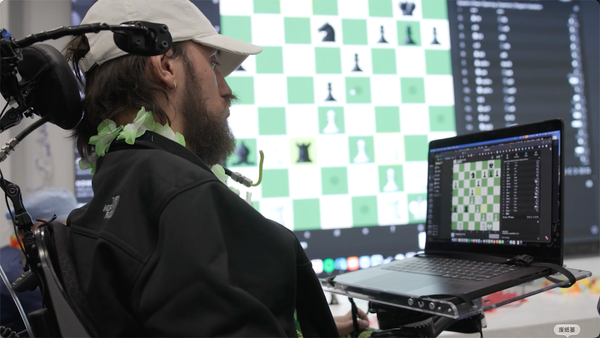
Neuralink holds data from over 30 N1 implants: Noland controls a computer with his mind and has returned to campus to study neuroscience; Nick uses a robotic arm to feed himself and scratch an itch. In October 2026, after pretraining on 50,000 hours of unlabeled data, participant P15 reached a cursor rate of 11.32 bits/s, with calibration time reduced from 10 minutes per day to 10 minutes per week. The company is prioritizing instantaneous bandwidth and performance gains driven by large-scale data.
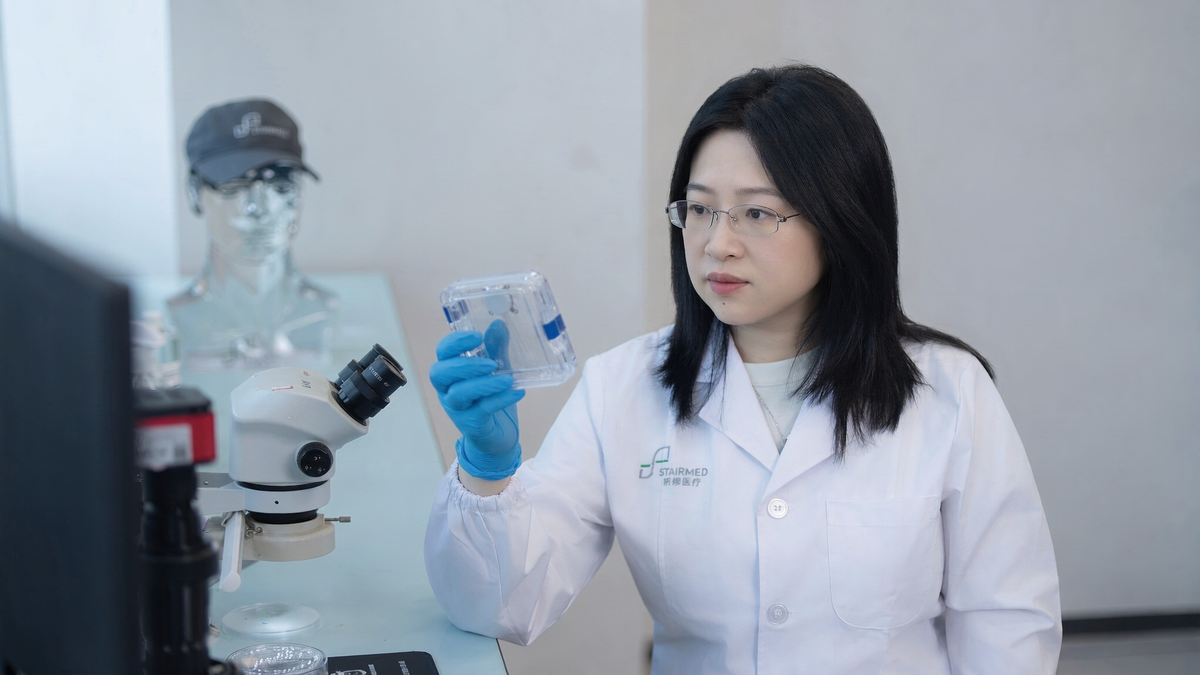
StairMed is taking a different path. Although the channel count of its WRS 01 is lower than the N1, by October 2026 StairMed had completed 42 long-term implants, with cumulative in-body time exceeding 5,000 days and brain-control usage surpassing 10,000 hours—the highest number of long-term full-invasive implants among companies on the same technical route worldwide. System latency from decoding to cursor response is under 50 milliseconds, with a peak information transfer rate of about 390 bits per minute. Its multicenter registration clinical trial completed full enrollment in August. Neuralink must still clear the PMA pathway, while StairMed is targeting NMPA Class III device approval. Both companies are advancing nearly in parallel from technical feasibility toward product clearance.
In speech decoding, both have enabled patients to “speak” again, but they are tackling different hard problems. In Neuralink’s early VOICE trial, an ALS participant achieved 75 words per minute of speech output with a 5.8% word error rate in the first week, and used a cloned voice to tell family members “I love you.” StairMed faces Chinese—a language where a change in tone completely alters meaning, so that “妈、麻、马、骂” share the same mouth shape yet convey entirely different meanings. In September, a 53-year-old ALS patient, Aunt Li, received a 512-channel dual-target system implant. After about one month of training, real-time Chinese character decoding accuracy exceeded 95% at roughly 80 characters per minute in the speaking state, and surpassed 90% at about 110 characters per minute in the silent-reading state. One is pushing English conversational speed; the other has cracked Chinese tones and silent speech. Neither is a slide-deck demonstration—both have been achieved in real people.
The write track is where the real gap may open—neither has yet reached human clinical trials. Neuralink’s Blindsight has only received FDA Breakthrough Device designation; the IDE application has not been submitted, preclinical validation is far from complete, and human trials remain a long way off. StairMed’s auditory brainstem implant, though published in Nature Communications, features electrode filaments as thin as 3 micrometers and a 128-site array spanning the full tonotopic axis of the cochlear nucleus, but it is still at the animal-experiment stage, with non-human primate studies planned next.
Reading has already landed in patients; writing remains stuck halfway. The most critical point of this race is this: whoever first crosses the write threshold will be better positioned to pull ahead in the next stage.