First Look Inside Neuralink HQ: R1 Robot Implants Brain Chip in 1.5 Seconds, Cursor Control Sets Record

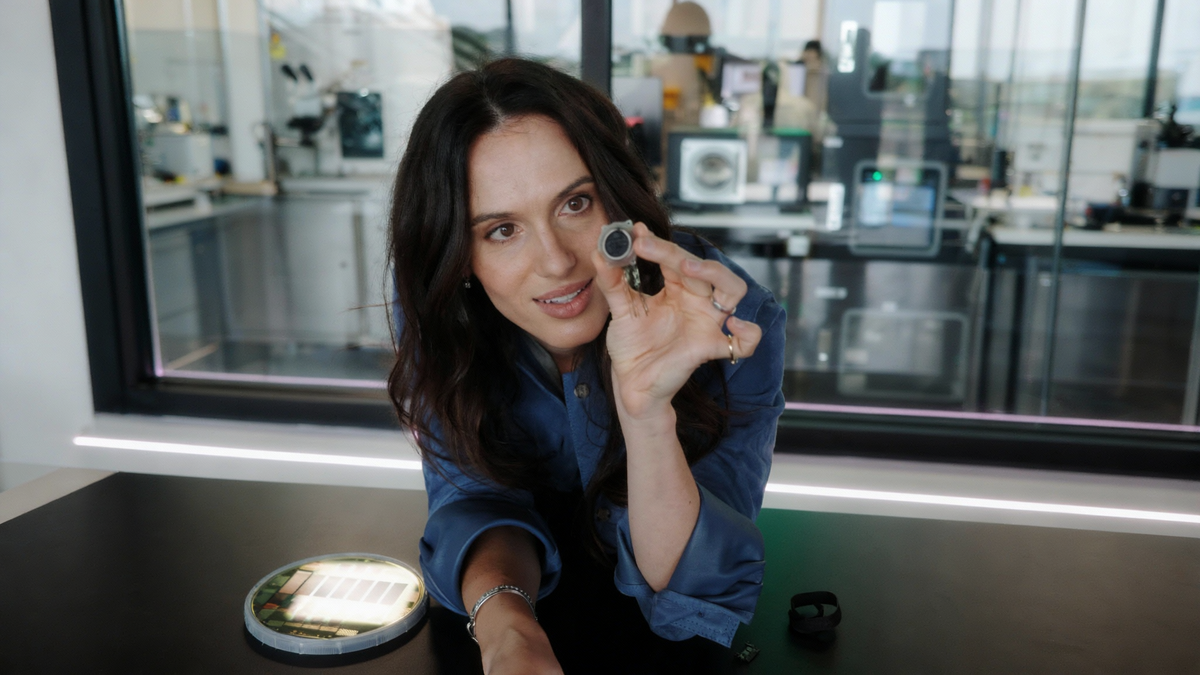
On October 30, tech video journalist Cleo Abram released a new episode of her show "HUGE If True," featuring the first close-up visit to Neuralink's Austin headquarters and fully documenting the workflow of its R1 surgical robot. The video clearly demonstrates how this semi-autonomous robot implants the N1 brain chip into the cerebral cortex, drawing widespread attention to the real progress of brain-computer interface (BCI) technology.
In the video, the R1 robot uses high-precision cameras and additional sensors to scan and map the brain surface in real time, dynamically updating a 3D map to avoid tiny blood vessels. It then uses an extremely fine needle to insert ultra-thin flexible electrode threads into the cortex one by one, each taking only about 1.5 seconds. These flexible threads are too delicate and soft to be handled directly by human hands, requiring the robot to perform the implantation. The final device sits flush with the skull, completely covered by the scalp, and is invisible from the outside; data is transmitted wirelessly via Bluetooth, completely replacing the earlier wired USB-C version that required passing through the skin.
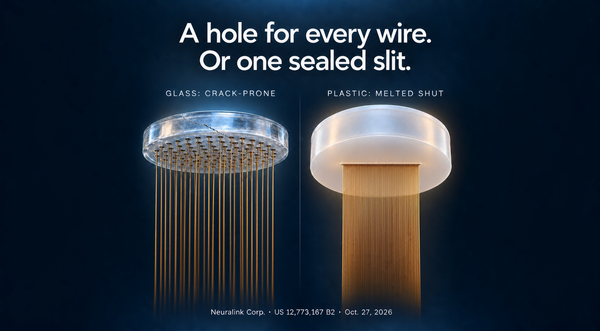
Neuralink's N1 implant contains hundreds of ultra-thin flexible threads equipped with over 1,000 electrodes, penetrating only about 4-5 millimeters into brain tissue. It can move slightly with the brain's natural pulsations, thereby reducing the tissue scarring issues commonly caused by traditional rigid devices (such as the Utah Array, used in humans since 2004). The video uses a vivid analogy to compare different technological approaches: placing electrodes outside the skull is like "being in a blimp guessing what game is being played in the stadium below"—you can sense the general atmosphere but can't get details; Synchron's approach of implanting via the jugular vein to avoid craniotomy is equivalent to "being inside the stadium but sitting in the nosebleed seats"; Precision Neuroscience's postage stamp-sized thin-film array covering the brain surface means you are "much closer to the field and can definitely see the score"; while the Utah Array and Neuralink's approach is like "dropping a microphone into the players' huddle"—directly capturing the most precise neural signals. Different solutions all involve trade-offs between signal quality and invasiveness.
Cleo Abram specifically emphasized in the video that current brain chips do not read thoughts themselves, but rather motor intent. After the brain sends commands via electrical signals along neural pathways, the chip intercepts and reroutes these signals "after the thought but before the action," a process referred to in the industry as "Neural Lip Reading." It's like reading the signals of your dog's name on the way to your mouth, rather than directly accessing memories. This is fundamentally different from mind-reading, skill downloads, or new sensory experiences depicted in sci-fi works—the brain intertwines memory and processing, making active input of entirely new information extremely complex. Creating a "new highway" is far more difficult than "riding the existing one."
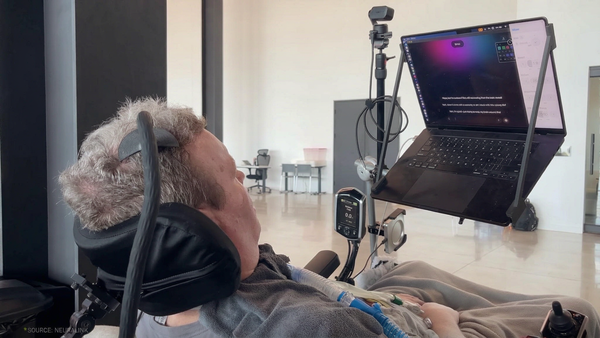
The most direct and valuable application of BCI at this stage is repairing damaged neural pathways. For paralyzed patients, signals cannot reach their limbs; for patients with motor neuron diseases like ALS, signals cannot reach the muscles of the mouth. After implantation, patients can already use their minds to control computer cursors, play video games, operate robotic arms, and even convert intentions into speech (with a participant demonstrating live: "I'm talking to you with my mind"). Combined with the visual cortex and external devices, it may also help restore vision for some blind people in the future. This is not hijacking the brain, but building bridges—when that extremely important neural highway is broken, BCI helps patients reconnect with the world and regain autonomy and communication abilities.
Recent technical updates released by Neuralink show that a foundation model trained on over 50,000 hours of neural activity data from clinical trial participants has enabled some users to achieve cursor control speeds of 11.32 bits/s—a metric that quantifies the speed and accuracy of users selecting targets, rather than simply measuring cursor movement speed. The company uses self-supervised neural encoders to learn representations from massive neural signals, enabling decoders to work stably for weeks instead of days, with calibration time for some participants drastically reduced from about 10 minutes per day to only 10 minutes per week. In addition, Neuralink demonstrated a "cursor teleportation" feature, allowing the cursor to jump directly to the target position without continuous movement. The company is also advancing features such as automatic speech detection and AI agents in speech restoration research, and Elon Musk retweeted the related video in approval. These results were released as a technical update and have not yet undergone peer review.
Overall, brain-computer interfaces are accelerating from science fiction to clinical reality. Their most practical significance at present is not about creating "superhumans," but about helping patients with severe neurological diseases regain dignity—ensuring doctors no longer have to say, "I'm sorry, there's nothing else we can do." As the core message conveyed by the video states: the ultimate goal of this technology is not to make people more like machines, but to let machines help keep us human. Human clinical trials are ongoing, and technological iteration continues to accelerate.