Neuralicorn Closes Strategic Funding for a Brain-Computer Interface That Helps Patients Speak Again

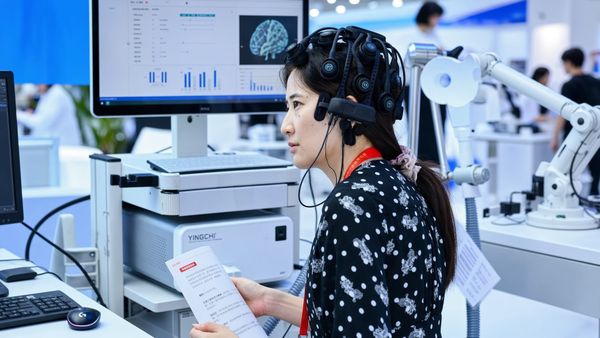
On November 9, per a VBData report, Neuralicorn — a brain-computer interface company spun out of Westlake University — has completed a new round of strategic financing. The investor is Huichuang Medical, a Chinese company focused on functional near-infrared spectroscopy, or fNIRS, and optical brain-computer interfaces. What Neuralicorn wants to solve sounds narrow, yet weighs heavily on countless families: helping people who have lost the ability to speak say what they mean again.
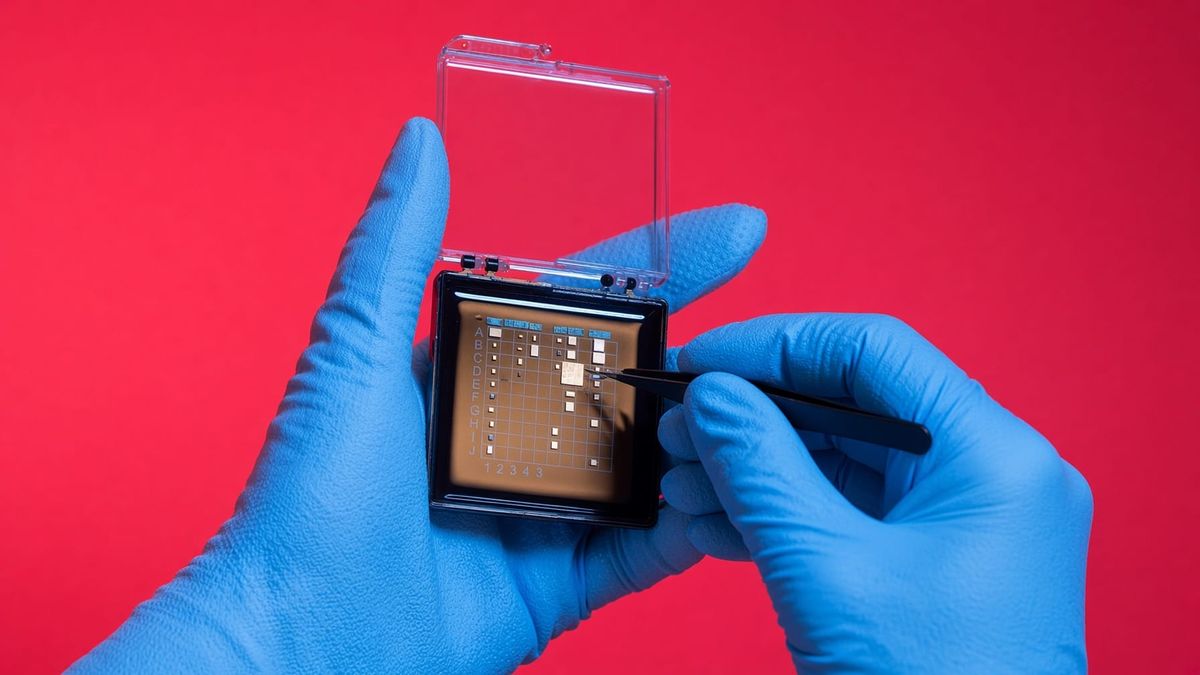
Diseases such as stroke and ALS can leave the mind fully alert while speech slowly fails. Existing assistive tools — eye-tracking systems, tiny motion switches — may only produce a few characters per minute, far from natural conversation. Neuralicorn is building a fully implantable brain-computer interface: high-density electrodes sit over the brain’s language and speech-motor areas, capturing the neural signal of “wanting to speak,” then self-developed chips and low-latency algorithms turn that intent into text or voice.
Not lip-reading. Not guessing movements. It connects directly to the brain’s language intent.
The hard part comes in two places. First, the chip. Hundreds of channels of neural signal sit at microvolt levels. All the amplification, conversion and wireless transmission must happen inside a coin-sized implant — with low power and no overheating. Neuralicorn has already developed its own high-throughput, low-power neural signal acquisition chip and integrated the algorithm into a fully implantable microsystem.
Second, Chinese-language decoding. English can be broken into phonemes. Chinese carries tone, homophones and no word spacing, so overseas models cannot simply be copied. Neuralicorn uses a unified model covering 407 Mandarin syllables, then leans on context prediction to reduce complexity — much like an input method that guesses the whole sentence from a few pinyin letters. In experimental settings, sentence-level character accuracy has passed 70%, online top-3 accuracy for single characters exceeds 90%, and inference latency is under 20 milliseconds.
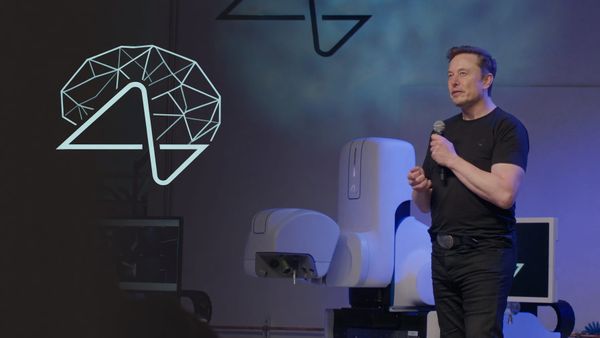
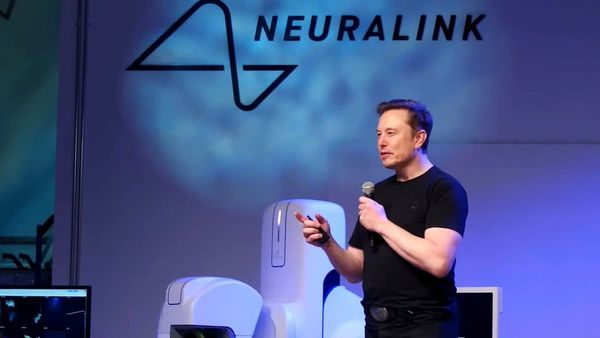
Globally, the field already has front-runners. The US company Paradromics has enabled an ALS participant to communicate through real-time, open-ended speech. Neuralink is working on voice-cloning output. Academic teams at UCSF have pushed real-time voice synthesis latency toward the 80-millisecond range. But what those groups validate is whether the path works for English. Neuralicorn is taking on the native-Chinese path.
The partnership with Huichuang Medical is less about capital than about scene. Huichuang’s devices are used in more than 1,000 tertiary hospitals, supporting brain-computer interface clinics and wards at institutions such as Beijing Tiantan Hospital and Wuhan Tongji Hospital. Huichuang knows exactly what the clinic demands: how many channels, what power budget, which indications come first. Those real needs feed backward into how the upstream chip should be designed, so the team is not inventing product specs in a vacuum.
Neuralicorn’s team reads like a typical scientist-founder setup. CEO Lu Cao has worked in natural language processing and brain-computer language decoding since 2011. Chief scientist Mohamad Sawan, a three-academy fellow in Canada, leads the neural-chip direction. Jie Yang handles neuromorphic chips and event-driven architecture. The core team has collaborated since 2019 and designed more than 30 chips.
Neuromorphic computing is the longer bet. As channel counts grow, traditional architectures burn too much power just moving data around. Event-driven, sparse computation and near-sensor processing may eventually support lighter, longer-lasting, more natural next-generation devices. Brain-computer interfaces do not just consume neuromorphic technology; they give it the most realistic workload to train on.
Neuralicorn’s core system has been shortlisted in the MIIT “leader” program for AI medical devices. After several dozen research-grade clinical cases, the company is moving toward registered clinical trials.
Cao puts it plainly: Chinese teams are not short on talent. What they lack is time — time for the supply chain and real-world scenarios to wear in together. Electrode materials, biocompatible packaging, miniature high-energy batteries — all of it has to be polished bit by bit.
From “letting someone speak one sentence again” to “giving the brain a higher-bandwidth line to the world,” this cannot be rushed. But after this round of funding, the first product that leaves the lab and enters the hospital feels a little closer.