Xinnao Technology's Wireless Dry-Electrode EEG System Clears Class II Medical Device Registration

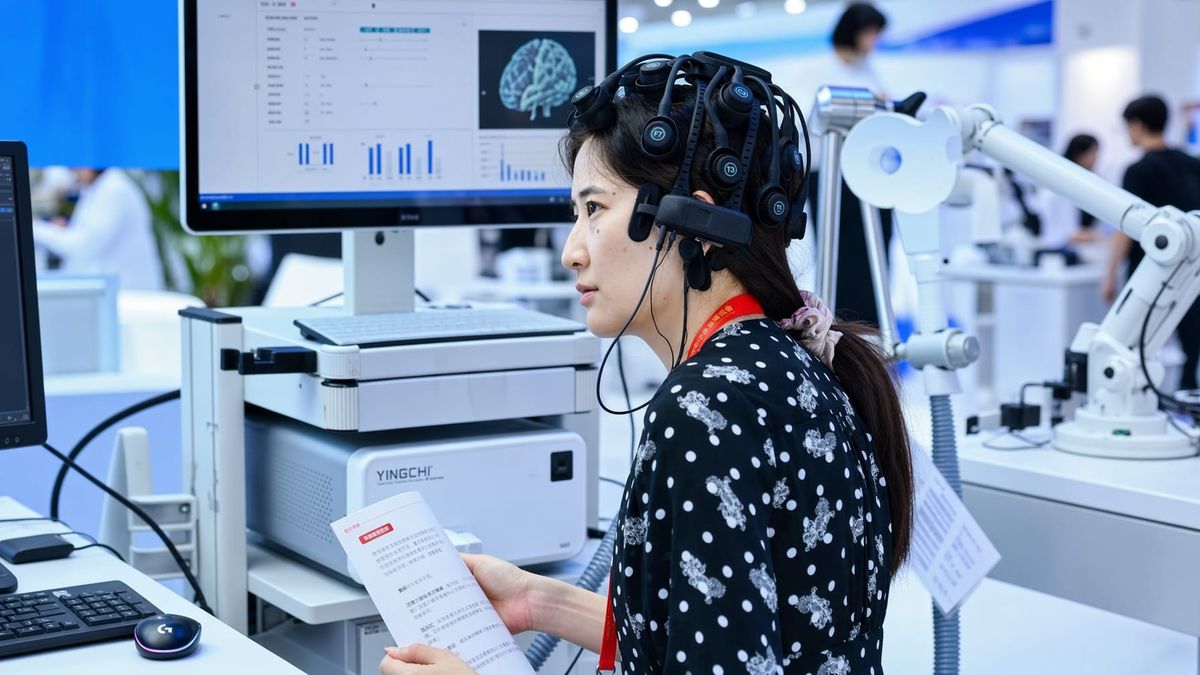
On November 9, Chengdu Xinnao Technology Co., Ltd. — the anchor enterprise of Sichuan's brain-computer interface industry chain — announced that its self-developed wireless dry-electrode EEG system has officially obtained a Class II medical device registration certificate. At the same time, the company's non-invasive BCI intervention system has received a classification determination notice from the National Medical Products Administration, clearing a key obstacle for subsequent registration filing.
According to the registration certificate, the approved product is named "EEG Recorder." It consists of a main recorder unit, EEG acquisition software, a USB receiver, electrodes, and ear clips. It is intended for use in medical institutions by trained healthcare professionals to acquire and record patients' EEG signals for electroencephalography examination. The registrant is Chengdu Xinnao Technology Co., Ltd., with both registered address and production site in Jinjiang District, Chengdu. The certificate was approved and took effect on November 6, 2026. This is a formal registration certificate, meaning the acquisition hardware has crossed the threshold of being compliant for sale and hospital deployment.
EEG acquisition is the first link in any brain-computer interface system. Traditional wet electrodes rely on conductive gel, involve cumbersome setup, and take long preparation time, making them hard to scale for high-frequency screening or long-term monitoring. Dry electrodes with wireless transmission move the acquisition end from "lab equipment" toward everyday medical devices. The value of this Class II certificate is not in a single feature — it is in putting non-invasive EEG acquisition hardware onto a standardized medical device pathway.
Equally important is the simultaneous classification progress: the non-invasive BCI intervention system has been confirmed to fall under brain-computer-interface-related medical device regulations. The distinction matters — the formally certified product this time is the signal acquisition device; the intervention system has completed classification determination but has not yet obtained its final registration certificate. Still, the regulatory path is now clear, and the company can move into substantive filing.
Xinnao Technology currently focuses on non-invasive BCI bottom-layer hardware, self-developed chips, a child brain-development large model, and closed-loop intervention equipment, primarily targeting neurodevelopmental disorders such as autism and broader brain-health intervention. As Sichuan's BCI anchor enterprise, its move sends a clear regional signal: the "Western Brain Valley (西部脑谷)" is building out the full chain of "research prototype — medical device — clinical scenario," rather than stopping at concept demos.
Across the industry, brain-computer interfaces are shifting from "who can capture the signal" to "who can turn the device into a regulatable, reusable, and scalable medical product." The non-invasive route has natural advantages in safety, acceptance, and deployment cost, but it depends heavily on front-end acquisition quality, decoding algorithms, and clearly defined clinical endpoints. By securing certification for the acquisition hardware first and then advancing the closed-loop intervention system, Xinnao is locking down the foundational layer before scaling up.
Next, the company will push forward registration and industrialization for multiple brain-computer interface medical devices. What deserves industry attention is not simply "another company got certified," but that non-invasive BCI is now running a full compliance cycle according to medical-device logic — hardware first, system next, with scenarios converging on specific disease areas.
The brain-computer interface story of Western Brain Valley is moving from papers and demos into registration certificates and hospital wards.