Nobel Optogenetics Tailwind Meets Near-Infrared Optical BCI: Golgi Secures First State-Owned Capital

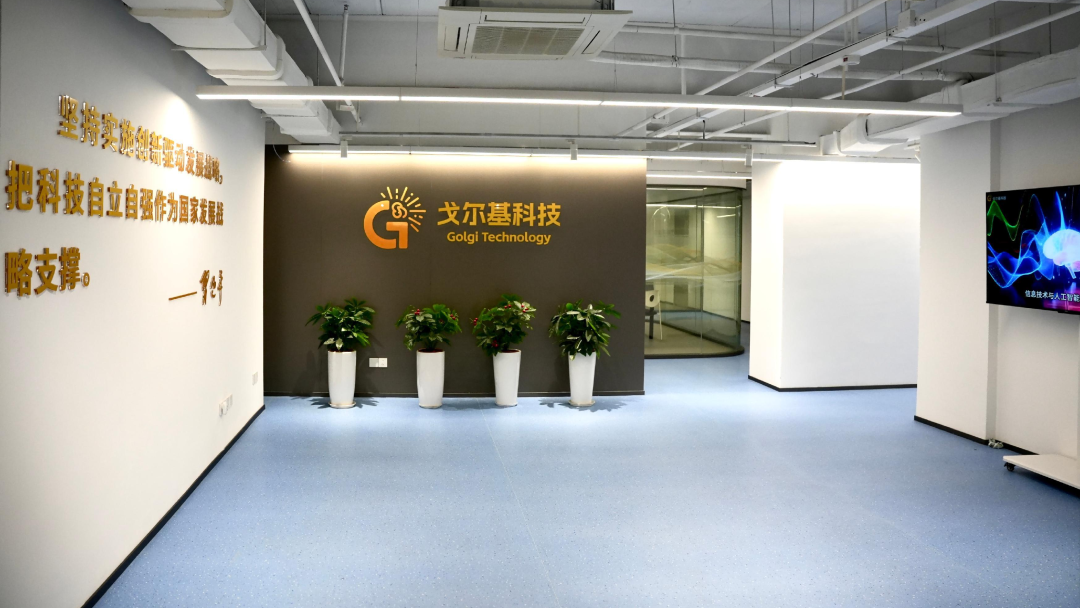
On October 28, Hangzhou Golgi Technology Co., Ltd. completed a new round of strategic financing and introduced its first state-owned strategic investor. Proceeds will go mainly into R&D iteration of non-invasive BCI and fNIRS brain-functional-imaging products, NMPA Class III medical-device registration, and deployment in grassroots clinical settings.
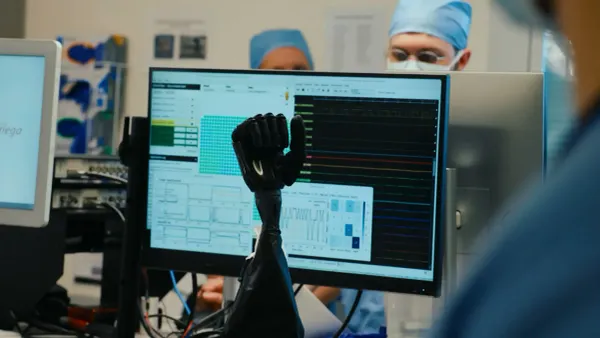
Golgi focuses on functional near-infrared spectroscopy (fNIRS). The technology uses 700–900 nm near-infrared light to pass through scalp and skull, measuring oxyhemoglobin and deoxyhemoglobin changes to read cortical activity non-invasively—positioning the company at the "reading end" of optical brain-computer interfaces.
The 2026 Nobel Prize in Physiology or Medicine went to Karl Deisseroth, Peter Hegemann and Georg Nagel for light-gated ion channels and optogenetics. Optogenetics gives the "writing end" cell-specific neural control; fNIRS gives the "reading end" non-invasive brain-function imaging. Together they frame the closed loop of optical neural interfaces.
Globally, optical BCI is moving from lab instruments to clinical devices. Japan's Hitachi pioneered clinical fNIRS with its ETG series and early adoption under Japan's Advanced Medical system; Shimadzu covers research and portable use with LABNIRS/LIGHTNIRS. In 2025, the Netherlands' Artinis and Germany's NIRx merged under Gilde Healthcare, combining wearable CE-certified systems such as Brite and MediBrite with NIRScout/NIRSport research-to-clinic platforms. The UK's Gowerlabs pushes high-density diffuse optical tomography with LUMO; the US's Kernel builds time-domain fNIRS into helmet-form "wearable fMRI" for cognitive decoding; South Korea's OBELAB ships wireless NIRSIT headsets. The market splits into benchtop research, portable clinical and wearable BCI tiers, where the real barrier is shifting from optical specs to regulatory clearance, clinical evidence and reimbursement.
In China, Danyang Huichuang Medical has placed 100+ channel fNIRS systems in over 1,000 top-tier hospitals and leads national near-infrared brain-imaging standards, while advancing closed-loop phototherapy for Alzheimer's. Golgi picks a narrower lane: no invasive implants, no consumer headbands, no research-only imaging. It builds fNIRS into brain-function-assessment infrastructure that is already NMPA Class II certified and Class III-bound, deployable at community clinics. Its "Silver Brain Guard" project with Lingyin Street Community Health Center won third prize at the 2026 Global Brain-Computer Interface × Medical Insurance Innovation Scenario Competition, organized by NHSA and the Zhejiang provincial government. Golgi also joins the 2026 national key R&D program on brain science and brain-inspired research, tackling bipolar disorder mechanisms and precision diagnosis.
Optical BCI now converges on three branches: optogenetics for writing, fNIRS for reading, transcranial photobiomodulation for regulation. Fully non-invasive human optogenetics remains distant, but "near-infrared reading + compliant devices + AI decoding" is ready for scale. Golgi's first state-owned capital essentially turns the Nobel-backed optics dividend into a payment-closed loop for community brain health. Next, the company will launch Series A, prioritizing investors with clinical, channel and manufacturing synergy, to move non-invasive BCI from equipment sales into routine screening, rehabilitation and brain-health management.