StairMed Discloses Latest Advances in Fully Invasive Brain-Computer Interface

On October 28, StairMed disclosed the latest clinical and industrialization progress of its fully invasive brain-computer interface (BCI). Its 256-channel minimally invasive implantable BCI system, WRS 01, has completed a cumulative total of 42 long-term implantations. The cumulative in-body duration of subjects exceeds 5,000 days, and the brain-control usage duration exceeds 10,000 hours. This makes StairMed the fully invasive BCI company with the largest number of long-term implanted patients globally.
In August 2026, the multi-center registered clinical trial of WRS 01 completed enrollment of all subjects, making it the world's first fully invasive BCI product to complete subject enrollment in a registered clinical trial. WRS 01 is the first fully invasive BCI product to enter the National Medical Products Administration (NMPA) Innovative Medical Device Special Review Procedure, primarily targeting motor function reconstruction for patients with high-level paraplegia. This marks the product's transition from early exploratory verification to a systematic clinical stage aimed at registration and market approval.
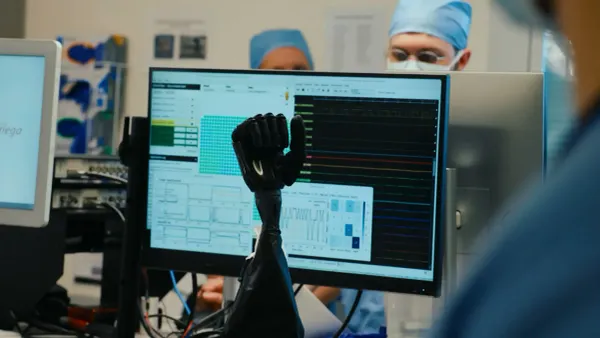
In terms of clinical performance, the system's execution delay from neural signal acquisition to computer control is less than 0.05 seconds, and the peak information transfer rate (ITR) of subjects can reach 390 bits/min. The fluency of brain-controlled operation is close to that of ordinary people using a computer. In real-world scenarios, subjects have achieved brain control of cursors, mobile phones, computers, smart wheelchairs, and robotic arms. A subject with high-level paraplegia in Hebei, only three months after implantation, was able to complete grasping and moving objects via a brain-controlled robotic arm, and even resumed online work and daily entertainment.
Technological breakthroughs focus on three levels. In terms of electrodes and implants, WRS 01 uses ultra-flexible electrodes, integrating key components into a coin-sized implant, balancing signal quality, implantation trauma, and long-term stability. For surgical reproducibility, StairMed self-developed a semi-automatic flexible electrode implantation system, which reduces the operation threshold through microscopic visual assistance and handle teleoperation. This system has been certified and is the world's first certified medical device for flexible electrode implantation surgery. In algorithm and peripheral collaboration, the team reconstructed decoding algorithms, interaction paradigms, and control models for three-dimensional robotic arm control, enabling users to perform continuous movements after short-term training.
The manufacturing system is another core of this progress. StairMed has built the "BCI Innovation and Manufacturing Base", integrating a medical-grade MEMS manufacturing center, a GMP production platform, and a dedicated testing platform for fully invasive BCIs. The MEMS center completes sub-micron processing of ultra-flexible neural electrodes through over a hundred processes including photolithography; the GMP platform covers precision assembly and quality control from electrodes to complete devices; the professional testing platform completes the closed loop from core components to system-level verification.
Among them, the self-developed "high-speed multi-channel electrochemical workstation" addresses the industry shortcoming of batch testing for 256-channel electrodes. Traditional equipment struggles to meet high-throughput channel automated testing, and manual channel-by-channel testing is time-consuming and inconsistent. StairMed's device supports 256-channel automatic switching and can perform tests such as impedance, cyclic voltammetry (CV), signal-to-noise ratio, and channel validity, compressing single-batch testing time from several days to 1 hour. Relying on over one million test data points, the company has participated in the drafting of more than ten national and industry standards for invasive BCI testing in China, and has passed the ISO 13485 medical device quality management system certification.
At the capital level, since the second half of 2026, StairMed has completed approximately RMB 1.4 billion in financing. As of September, the cumulative financing amount reached RMB 2.6 billion, making it the invasive BCI company with the highest cumulative financing in China. Shareholders include industrial capital such as Tencent, Alibaba, Geely Capital, and CATL; state-owned institutions such as SDIC Chuanghe and Shanghai Guotou Pioneer; and professional investment institutions such as OrbiMed, Qiming Venture Partners, and Lilly Asia Ventures, providing a foundation for collaboration in chips, batteries, artificial intelligence, and clinical resources.
From an industry perspective, StairMed's progress reflects a shift in the competitive dimensions of brain-computer interfaces: the industry is shifting from "who does it first, who has more channels" to "who can achieve long-term implantation, stable mass production, and complete the registration path." The 42 long-term implantations and registered clinical enrollments provide not just the number of cases, but also evidence of long-term safety, usage frequency, and cross-center reproducibility that regulators care most about. As WRS 01 enters the registered clinical stage, the core variable of BCI industrialization is shifting from technology demonstration to clinical endpoints and quality systems.
In the next stage, StairMed will advance products for neuromodulation and language function reconstruction beyond motor function reconstruction, covering indications such as Parkinson's disease, refractory epilepsy, and language function disorders.